Reward system not working anymore? The five most common reasons
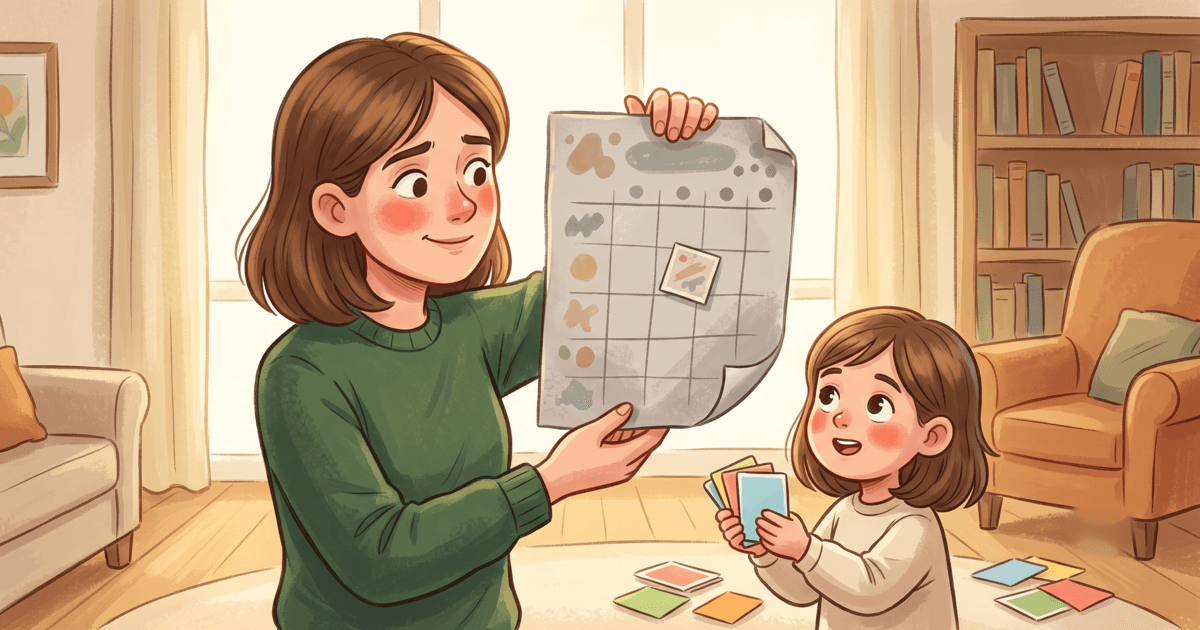
It almost always starts the same way: the first two weeks with the new reward system go wonderfully. Your child collects points, delights in every completed task, the morning is calmer. And then, gradually or quite suddenly, it stops working. The points barely interest anyone anymore, the old arguments are back, and you wonder whether you did something wrong.
This is by far the most common point at which families come back with a question. And the good news up front: a system that worked at the start is rarely broken. Usually just one detail in the mechanics has shifted.
In short
When a reward system works at first and later falls off, it’s almost always down to one of five mechanical problems, not to your child and not to a lack of consistency. And all five can be fixed, often with a single adjustment. Work through the list below in order; the chances are high that you’ll recognize yourself immediately in one or two points.
One more thought up front, because it takes a lot of pressure off: if a system falls off after two good weeks, that’s a good sign. It worked, and now it needs a readjustment, like almost every tool you use for a while. So you’re not looking for a mistake you made, but for the one screw that has just worked loose.
Reason 1: The path to the reward is too long
The symptom: your child starts out motivated but loses interest after a few days. You hear sentences like “This takes forever”, or the points simply aren’t looked at anymore.
Why it happens: many systems set a big goal at the end of the week or even the month. For a child, and especially with ADHD, a reward that only comes in five days feels infinitely far away. Reinforcement works most strongly when it follows quickly on the desired behavior. The greater the gap between “done” and “received”, the weaker the connection.
What to change specifically: shorten the cycle radically. Instead of a weekly goal, a small redemption each day or every few days. The rewards may well be small; what matters is not the size but that the success becomes noticeable promptly. A child who can exchange something this evening for the points collected today is more likely to stay engaged than one who has to wait for Saturday. For more on why short cycles make such a difference, especially with ADHD, see the guide to token systems for ADHD.
Reason 2: The rewards have worn off
The symptom: the very reward that made your child’s eyes light up three weeks ago no longer tempts anyone. “The rewards don’t pull anymore” is one of the phrases we hear most often.
Why it happens: every reward loses its appeal over time; that’s a completely normal satiation effect. What is constantly available and always the same becomes taken for granted. The twentieth episode of the same series as a reward simply no longer feels like a reward.
What to change specifically: bring in some movement. Rotate the rewards so that it isn’t always the same on offer. Let your child help decide and suggest new rewards themselves; what a child has chosen for themselves almost always pulls harder. A few wish rewards from the child keep the system alive. And one note that matters to us: the strongest and most durable rewards are usually not things, but shared moments: baking something together, an extra round of reading aloud, an outing you both look forward to.
Reason 3: The hurdle is too high or too low
The symptom: your child barely reaches the tasks and seems frustrated. Or they tick everything off in seconds without anything really changing in daily life.
Why it happens: if the tasks are too big or worded too vaguely (“tidy the room” is, for a child, a huge, diffuse cloud), the child mostly experiences failure instead of success. A system that feels like a series of missed goals motivates no one. Conversely: if the tasks are too easy, no real sense of achievement arises; the points become a formality.
What to change specifically: cut the tasks smaller and word them so that both of you can see when they’re done. Not “tidy up”, but “put the books back on the shelf”. Not “get ready for school”, but the three concrete steps that make it up. Worded observably means: there’s no argument about whether something is done; you can see it. Deliberately secure a few easy successes at the start so your child gets into a run of success, and only raise the hurdle once a task really sits. For how to cut tasks sensibly, step by step, see the guide to using a reinforcement plan at home.
Reason 4: The tracking has fallen asleep
The symptom: on honest reflection, you notice that you yourselves haven’t kept track of who has which points for a few days. The child may even have kept trying, but the feedback from your side has been missing.
Common mistake
Why it happens: this is the most uncomfortable point, and we’ll say it openly anyway: a reward system almost always collapses at the parents, who stop keeping it going, not at the child. And that is completely understandable. Everyday life with a job, siblings, and everything else eats exactly the two minutes in the evening it takes to keep track. Without reliable feedback, though, the system loses its meaning for the child, because a point that no one confirms doesn’t reach the child.
What to change specifically: do an honest self-check and then reduce the effort as far as possible. A visible place where the system is present for everyone, and a fixed moment in the day, for example right after dinner, help more than the resolution to “remember it”. This one problem, that a paper plan falls asleep in everyday life even though it was good in substance, was our reason for building Kikidori in the first place. The aim was to make keeping track so easy that it survives everyday life.
Reason 5: Points are deducted or mixed with punishments
The symptom: your child withdraws as soon as points come up, perhaps gets angry or refuses the system entirely. “We were consistent, but nothing changes”: on closer inspection, the reward has long since become a threat.
Why it happens: when points are deducted for bad behavior or the system is linked to punishments, its whole logic tips over. Reinforcement becomes punishment. A child who experiences that hard-earned points can disappear again protects themselves by withdrawing inwardly and not investing in the first place. Why make an effort if the success can be taken away again at any time?
What to change specifically: never take points away. What your child has earned stays theirs, without exception. Not achieved has no consequences and is simply the starting point for tomorrow. If there are to be consequences for certain behavior, keep them strictly separate from the reward system. The two must not touch, or the reward loses its safe character and with it its effect.
Work through the five points calmly, one by one; often a single adjustment is enough to make the system carry again. Reward systems are a proven tool among several, not a must. Which methods are well documented professionally and where you can read on, we’ve gathered on our evidence page.
FAQ
Our child only wants to be rewarded now: have we spoiled them?
No. A child asking “What do I get for it?” is not a character flaw but a learned rule; they’ve understood how the system works. This is usually a signal that the rewards have become too material, or that it’s time to gently fade the system out. Bring shared moments, praise, and the sense of having got something done back to the fore, and frame the points as a transitional aid, not a permanent state.
Can we simply restart the system?
Yes. A restart works best after a real break of one or two weeks and with a changed setup: a shorter path to the reward, fresh rewards, smaller-cut tasks. Involve your child in the restart: what should stay, what should be added? A restart that simply boots up the old system again usually runs into the same dead end.
When should we start fading the reward system out?
When a routine has held on its own for several weeks and your child does it without a daily glance at the points, that is the right moment to slowly take that one task out of the system. Fading out doesn’t mean switching off overnight, but task by task. The system is meant as a transitional aid, not a permanent state; the goal is for it to make itself unnecessary over time.
Could it be our child that nothing helps?
Usually not; check the mechanics first: the path to the reward, wear-off, the way tasks are cut, tracking, and whether punishments have crept in. In the vast majority of cases the reason lies there and not in the child. And honestly: some children respond little to token systems overall. If you’ve worked cleanly through the five points and still nothing moves, that is not a failure; it’s then worth discussing other approaches with your pediatrician or therapist.
Read on
Who writes here
We are a family with a neurodivergent daughter, and we work professionally in software development and data protection. We write from lived experience and carefully researched sources — we are not therapists. Kikidori grew out of our own everyday life.
This guide is no substitute for medical or therapeutic advice. For questions about diagnosis and treatment, please talk to your pediatrician, an SPZ (a social-pediatric center), or your child-and-adolescent psychotherapist.